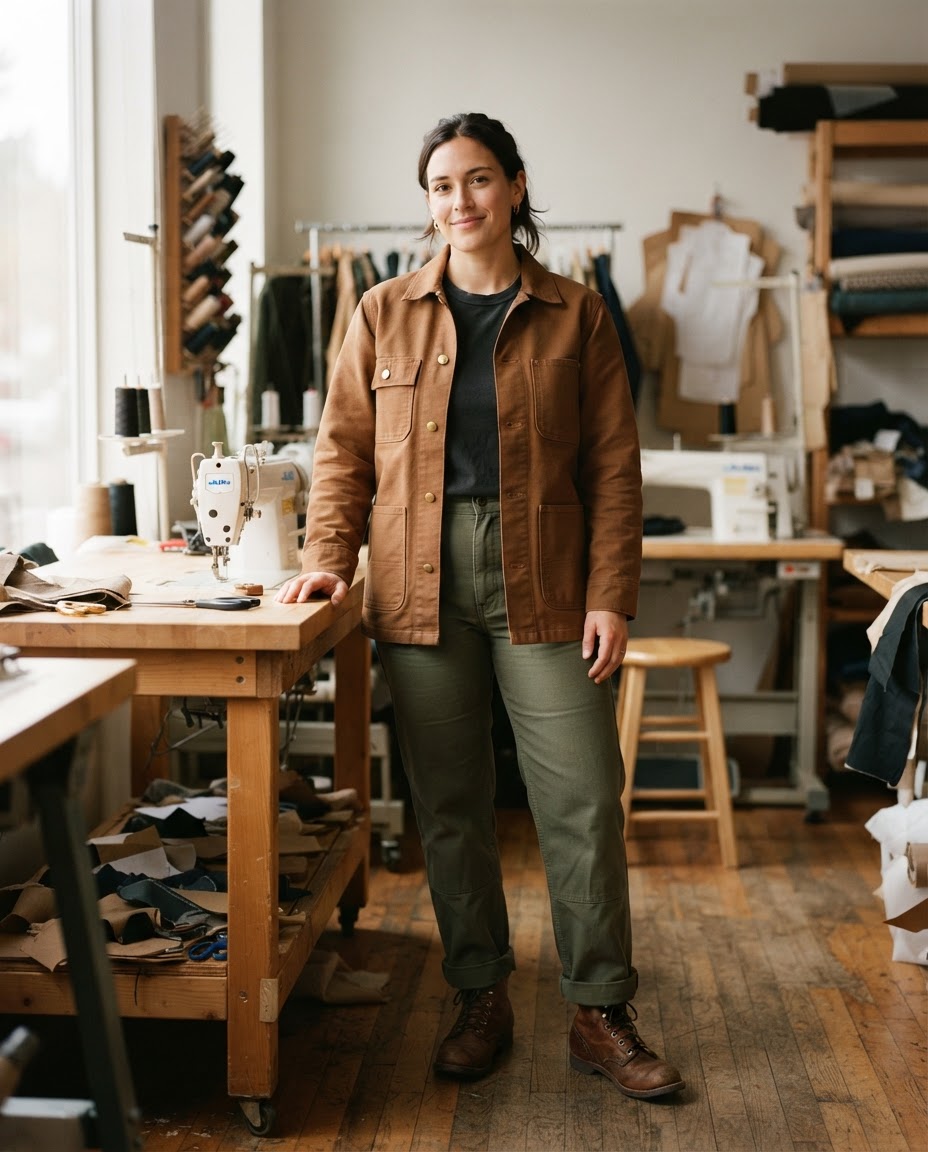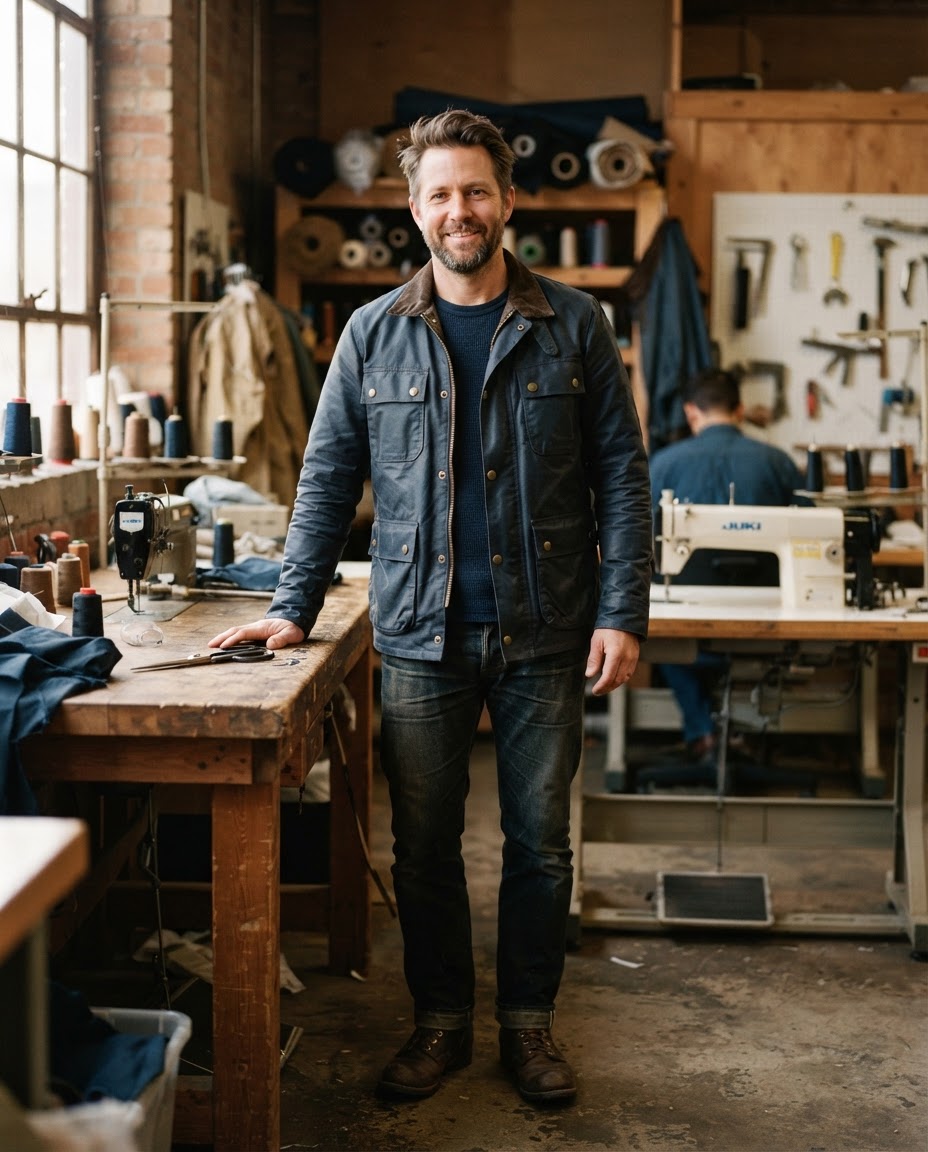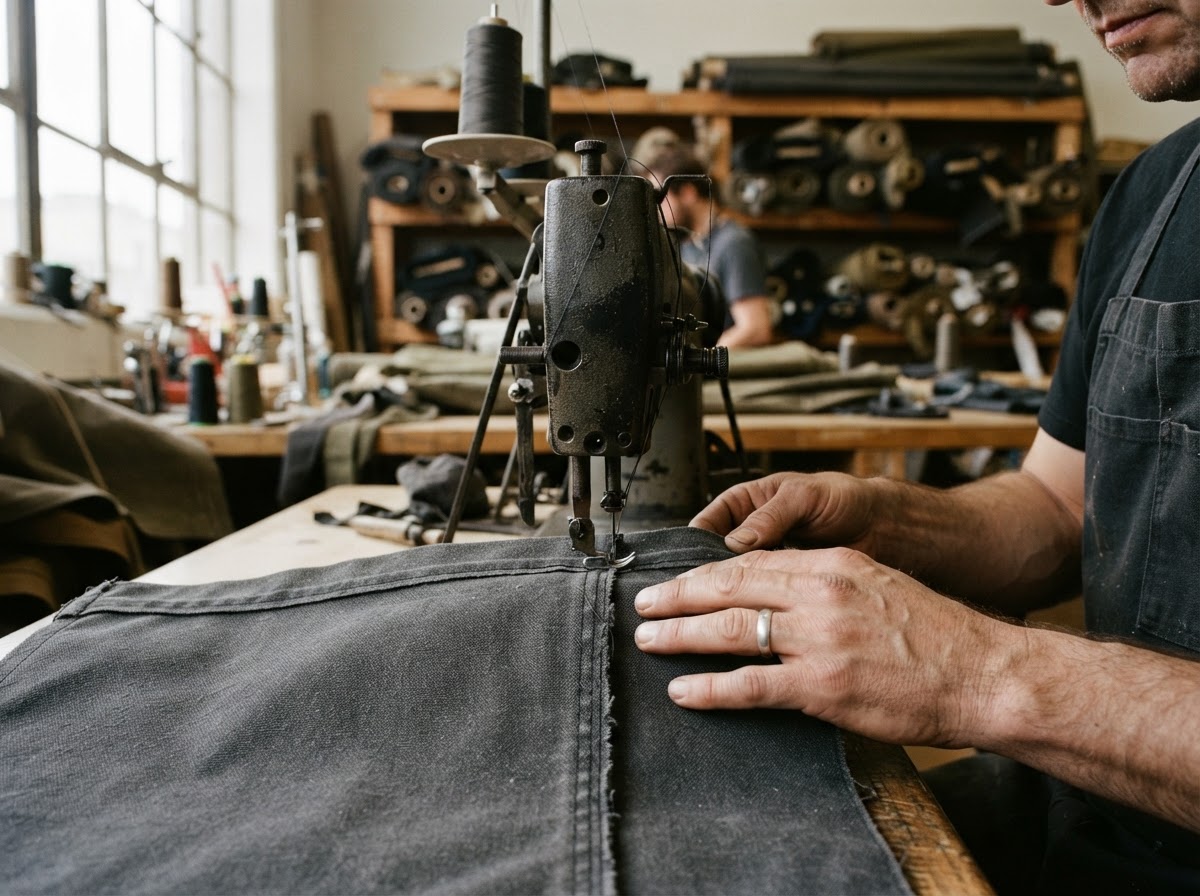
The first thing you notice in our shop is the rhythm. The long table, the shears, the machines starting and stopping as a seam is checked. Founder Nina Okafor started Field & Mercer in 2017; today, our team of six makes each run in a Portland workshop. We keep the batches small enough to know what is on each machine and what needs another look before it moves along.
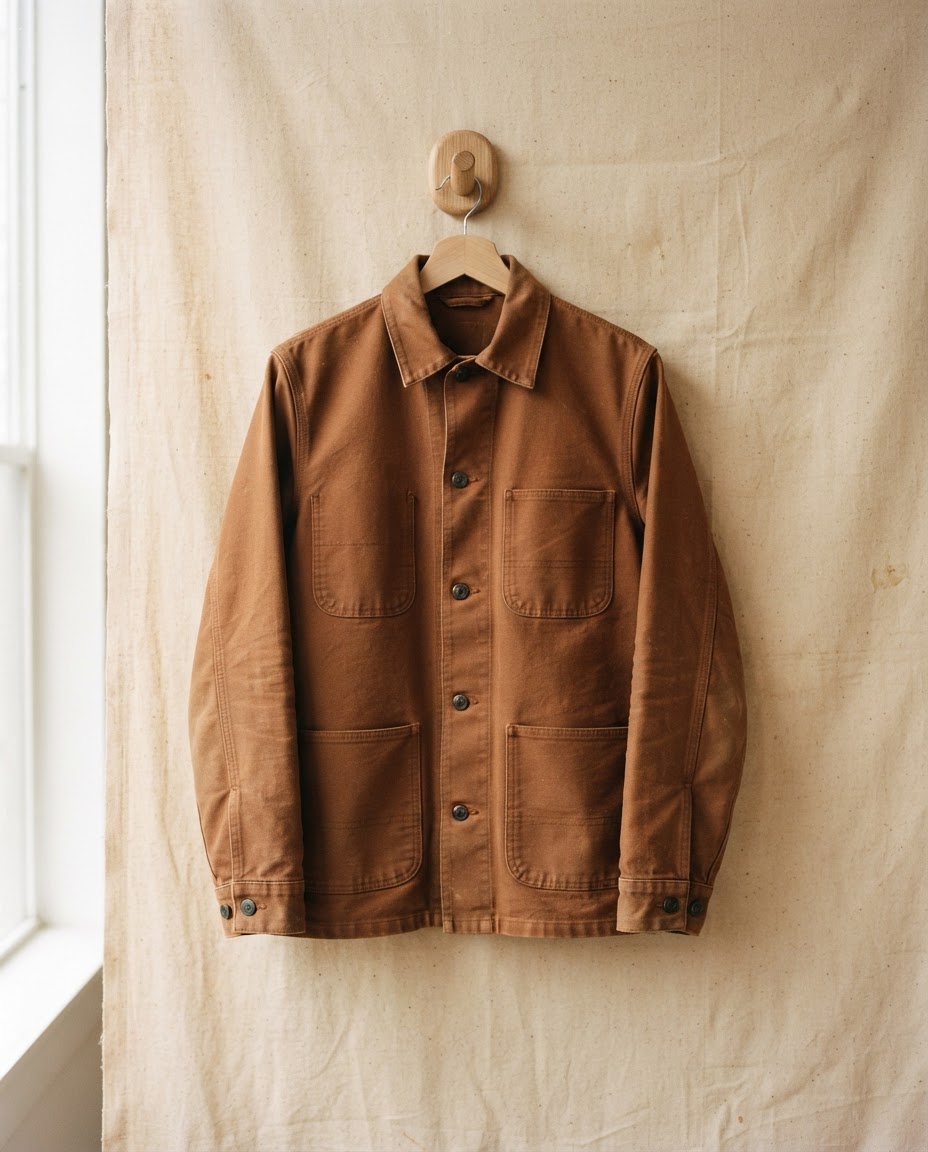
A Chore Coat begins with 12 oz cotton duck. It is sturdy, but it is still a woven fabric with a grain, a face, and the occasional place that asks us to shift the pattern. We cut the body panels with the grain aligned, then build the pockets while the pieces are flat. Their corners take reinforcement because they will carry keys, a tape measure, or a handful of screws. We sew the pocket edges twice where the stress is greatest, and press the seam before attaching the next piece. That order keeps the work neat without asking the fabric to behave like something thinner.
A good seam is not just a straight line. It has a consistent allowance, enough room for movement, and a beginning and end secured so daily use does not pull it apart. At the machine, we slow down at intersections where several layers meet. The needle can push a heavy fold sideways if you force it. Nina says to let the feed dogs do their part and guide the canvas with a steady hand. It sounds simple until you reach the bulky corner of a pocket.
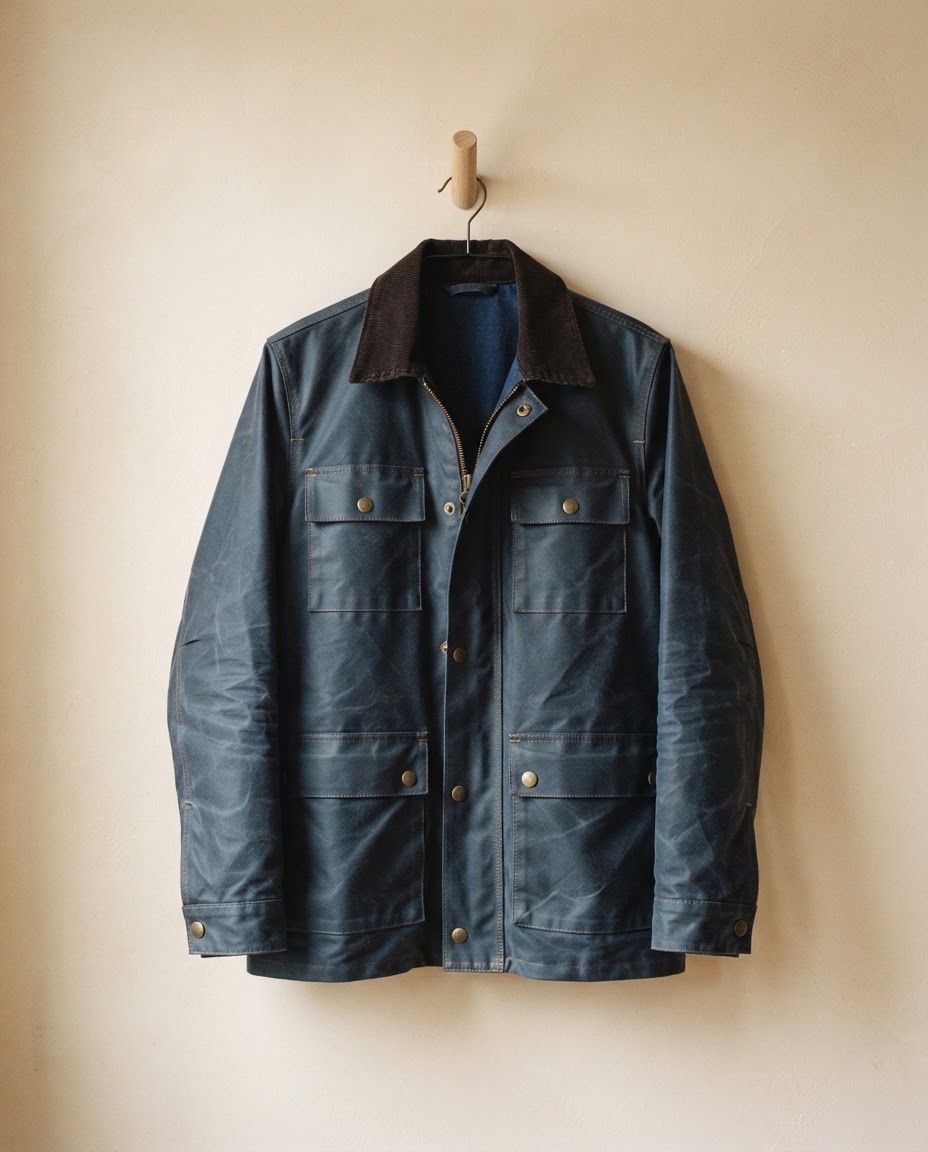
Waxed canvas asks for a different kind of attention. The finish can leave a faint mark where the cloth folds, and the layer under the presser foot has a little more drag. On the Waxed Field Jacket we keep the seams even and avoid fussing over every temporary crease. The canvas will settle as it is worn. We check the collar, front placket, and pocket flaps for clean alignment, because those are the places a person sees and uses every day.
One afternoon, a coat came back after a few months of work on a renovation crew. The lower pocket corner had started to open where a pair of pliers rode every day. We unpicked only the loose part, backed the inside with a small piece of matching duck, and stitched the corner down again. The repair took longer to set up than to sew, but there was no reason to replace a coat whose body and sleeves were still doing their job. The owner collected it on the way home and wore it out of the workshop.
Small batch means we can remember that coat and learn from it. It also means checking the seam before the garment is packed, rather than hoping nobody notices later. We are not trying to make a piece that never changes. We want it to stay useful, and we are glad to see it again when it needs a hand. A seam that has been worn open is useful information, too. We look at where the stress gathered, whether a pocket was carrying weight, and how the cloth moved around the wearer. Sometimes we change the reinforcement on the next run; sometimes the right answer is simply a careful repair and a note about what we found. Either way, the garment gets treated as something with a future, not a return on a checklist.
— Nina, Field & Mercer
Explore free repairs for life