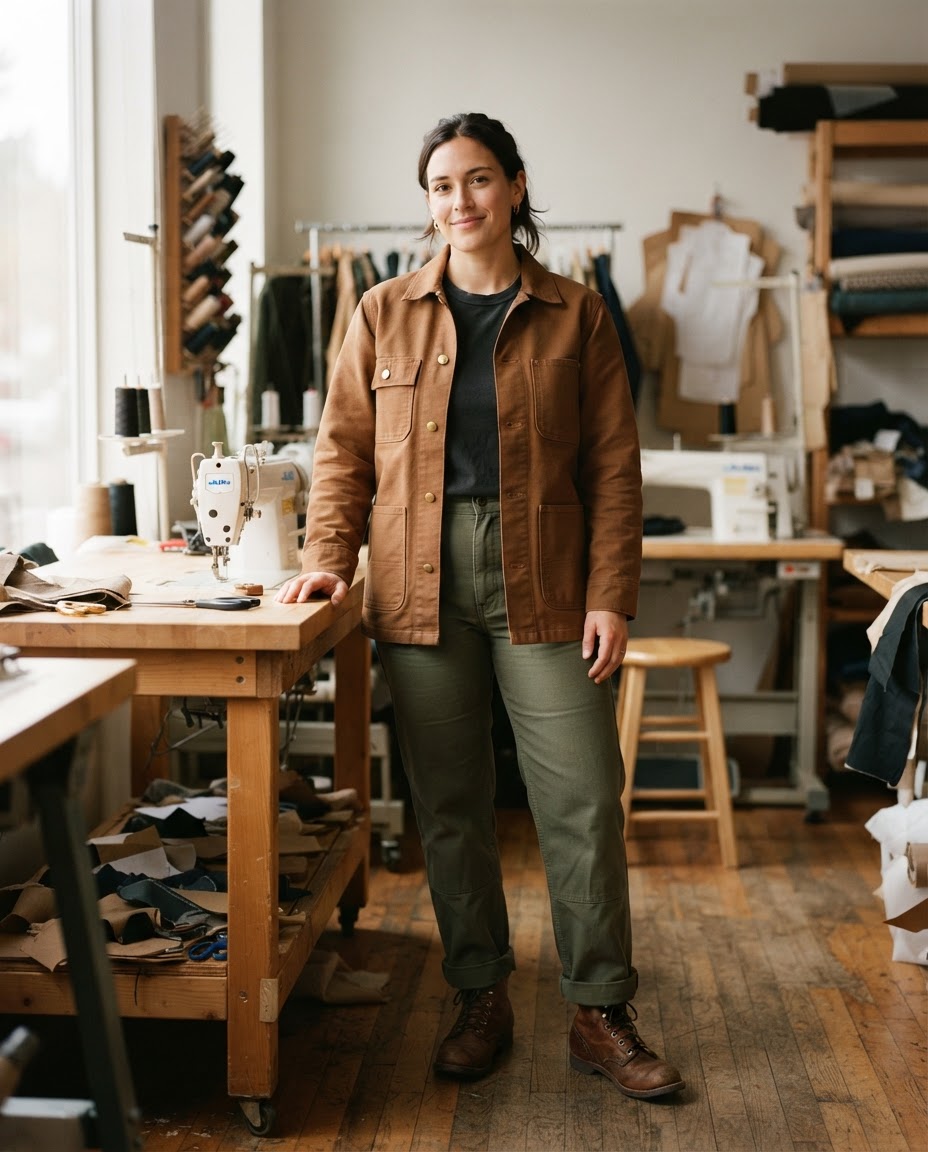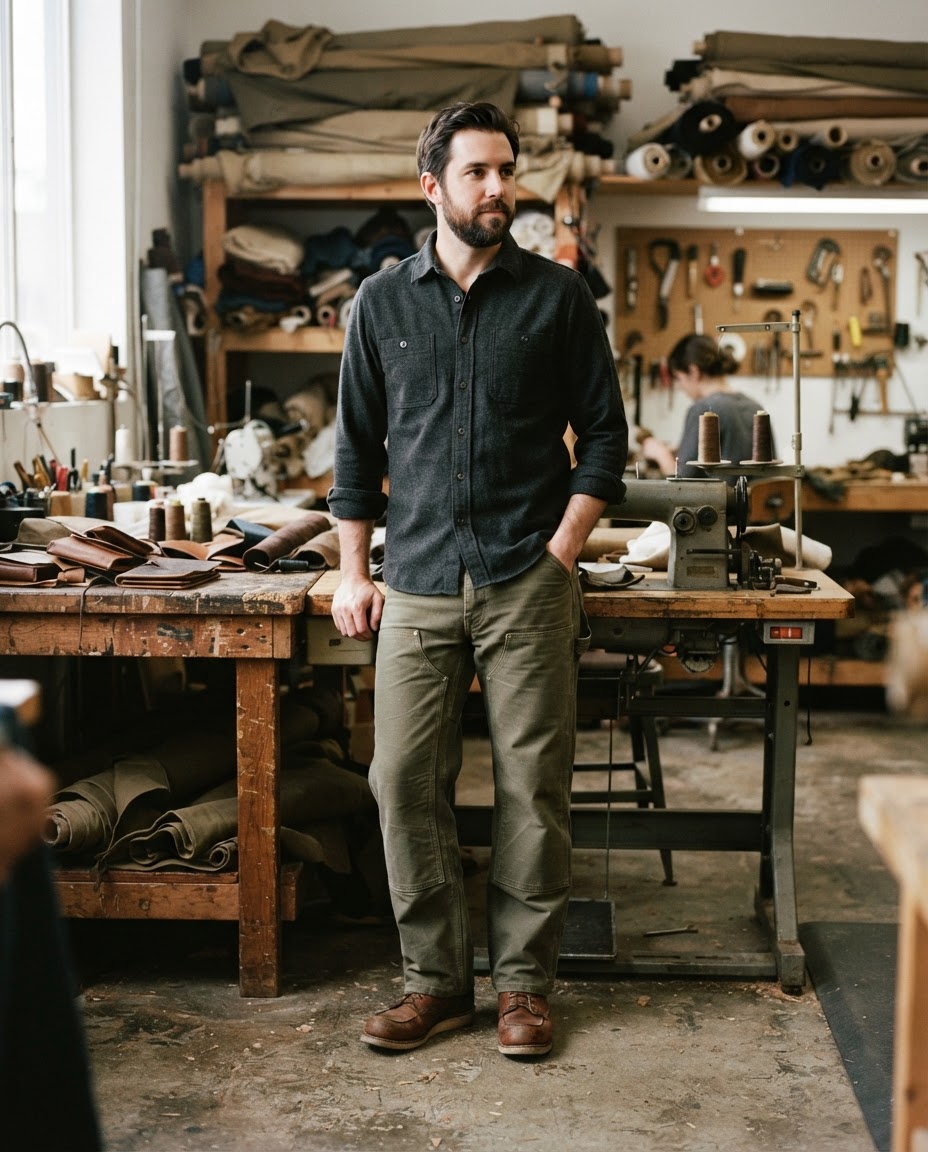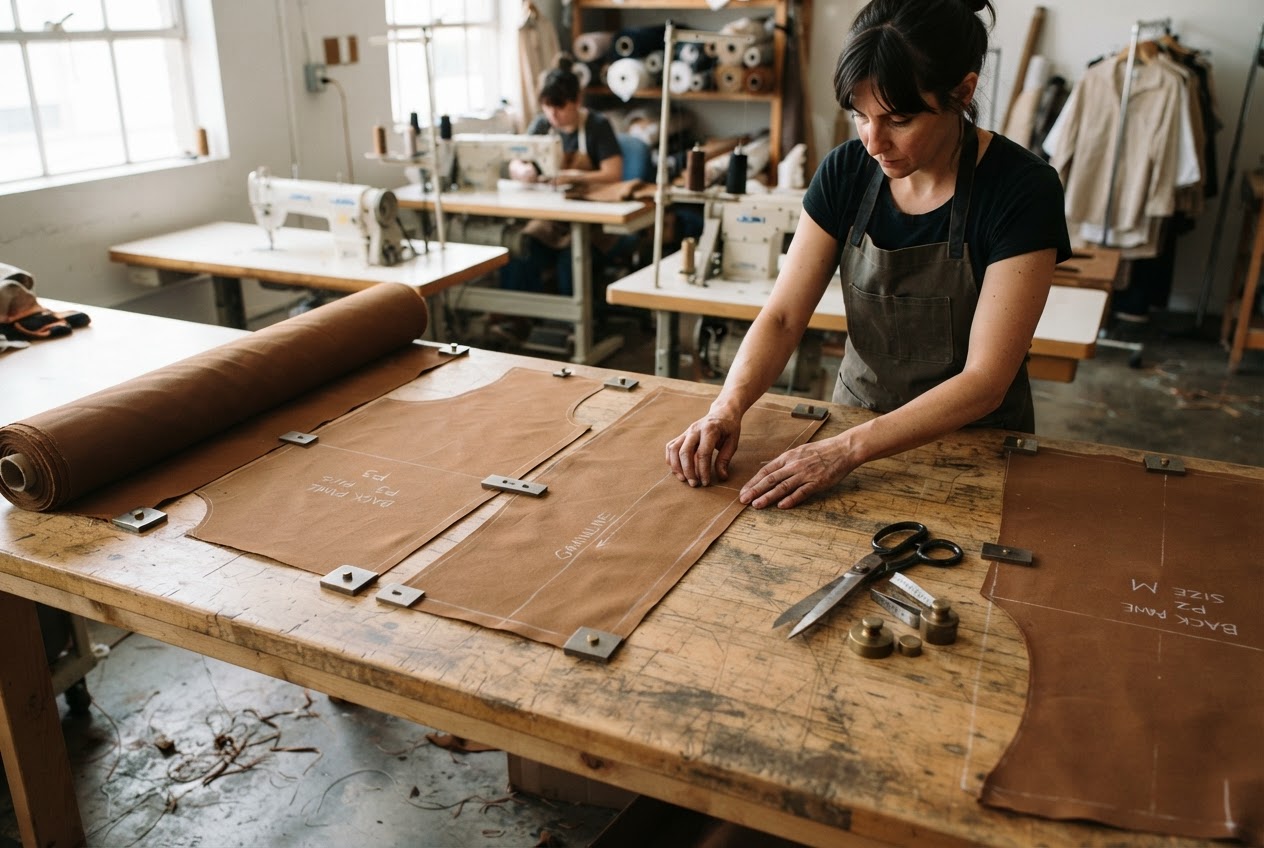
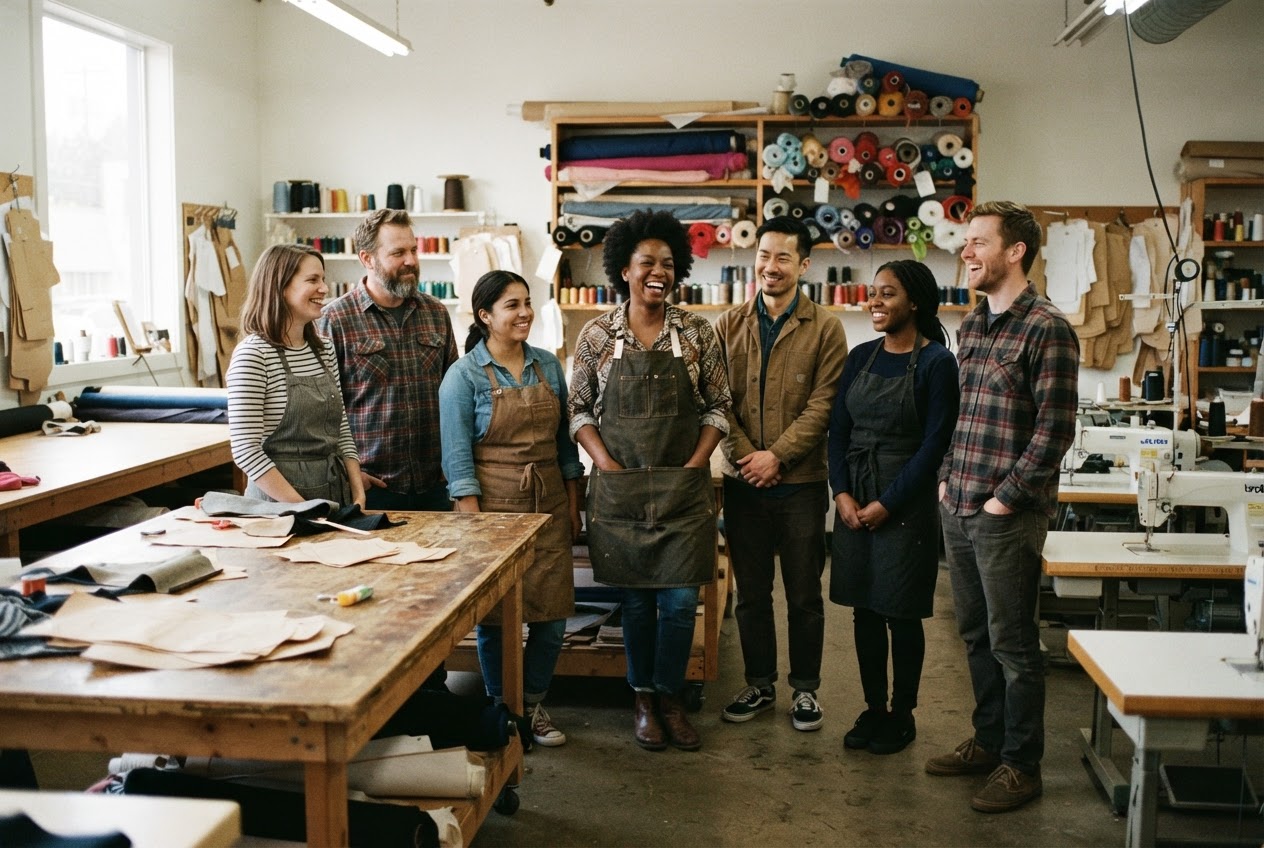
Before a garment is a garment, it is a length of cloth and a plan laid out on the cutting table. Ours is a maple-topped table in the Portland workshop, worn smooth in the places where six pairs of hands have worked since founder Nina Okafor started Field & Mercer in 2017. On a busy morning you can hear the paper patterns shifting, the steel shears closing, and someone asking for another weight to hold a corner flat.
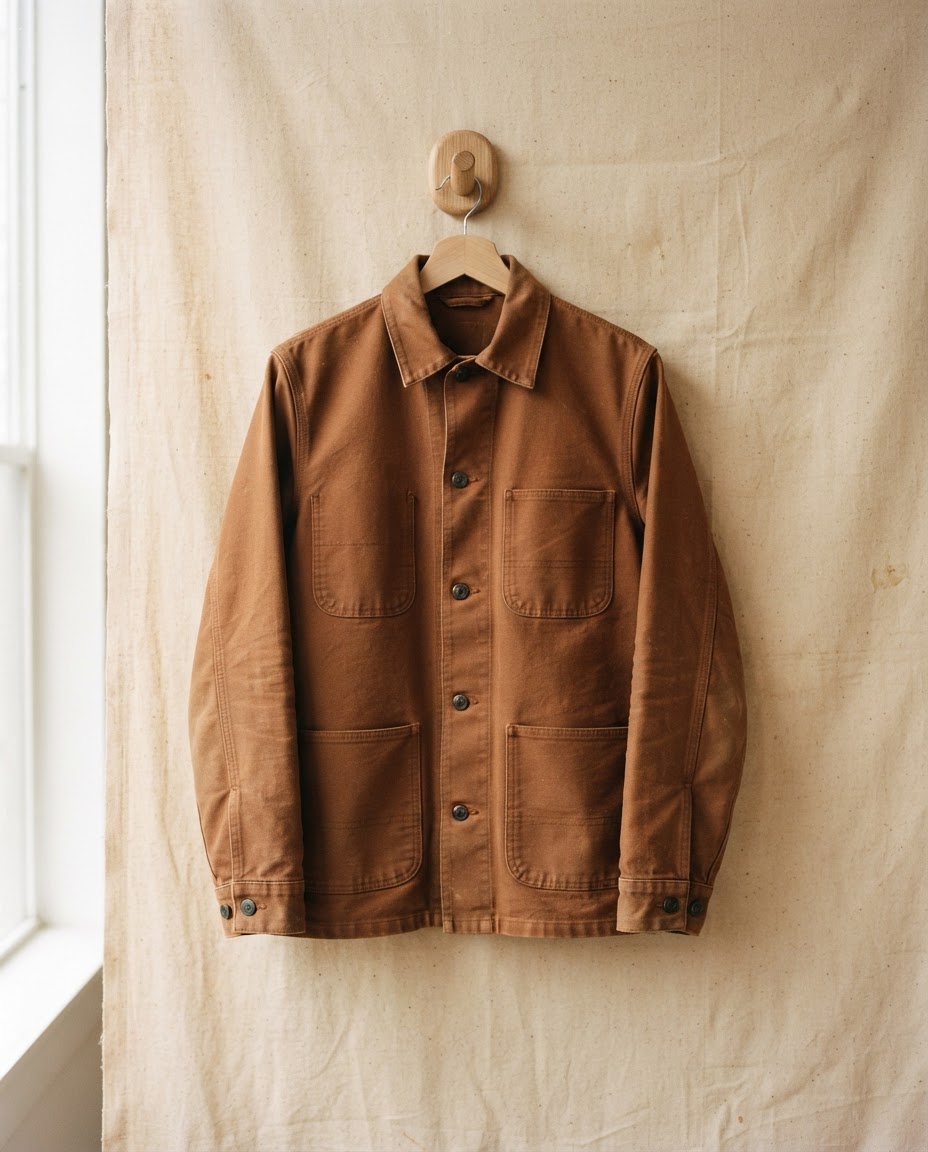
We start with the fabric, not the speed of the order board. A roll of 12 oz cotton duck has a face and a grain; turn the pieces the wrong way and a sleeve can catch the light differently from its mate. Nina checks the roll for a flaw, then we look at how the weave runs before chalking the pattern. The chore coat fronts, collar, sleeves, pockets, and facings have to fit together with enough room left for seam allowances and the small corrections a real cloth sometimes asks for.
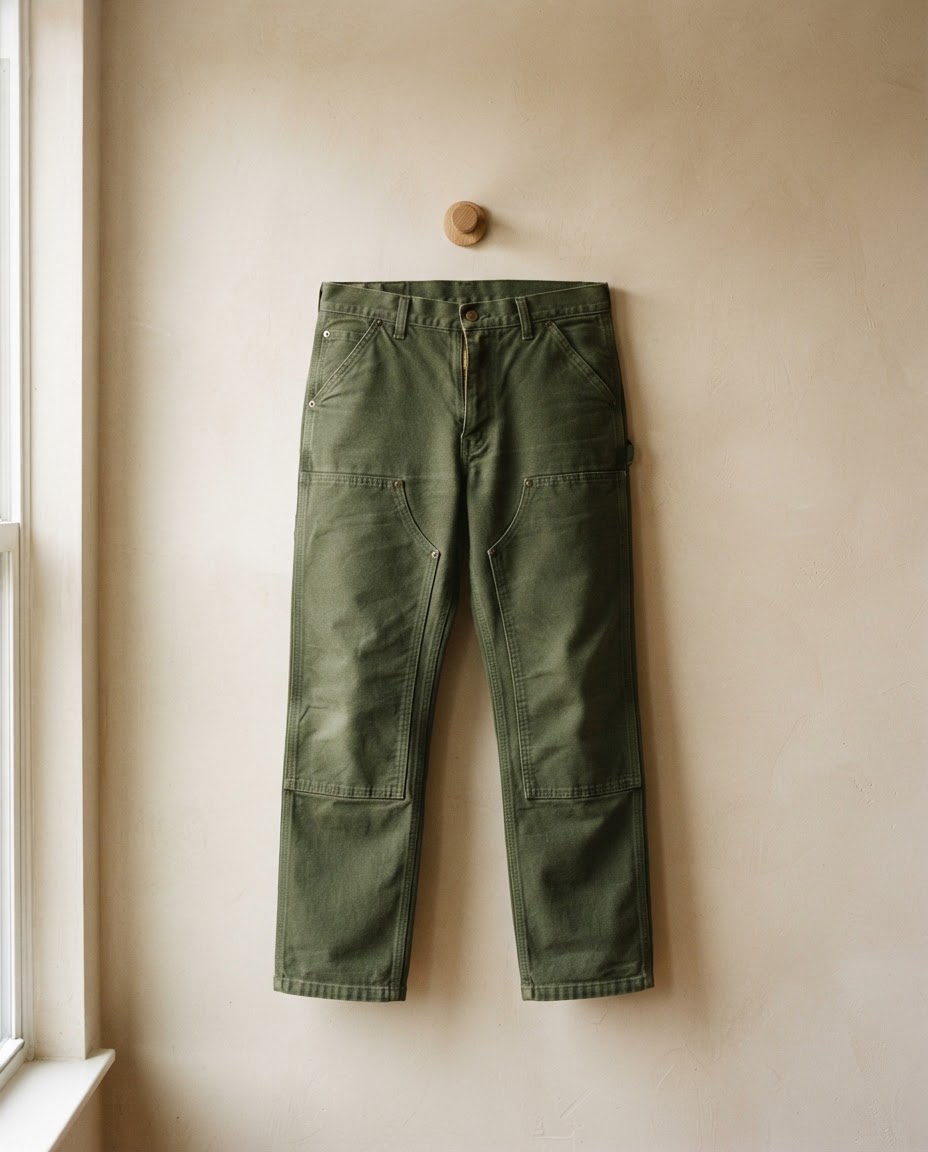
The same care matters on the Double-Knee Canvas Pant. The two knee panels are not simply extra rectangles. Their placement has to land where a person bends, and both legs need to match once the seams are closed. We mark the pocket openings and reinforcement points while every piece still lies flat. That is the moment to catch a crooked line. It is much harder after the machine has carried it through several layers.
There is a little arithmetic in cutting, but most of the judgment comes from repetition. Nina can feel when a canvas has relaxed enough to lie properly. A newer cutter learns to follow the grain with the pattern edge and to leave enough clear table for a long, confident pass with the shears. We do not hurry the last inch. A ragged edge can travel into a seam, and a careful cut makes the sewing easier for the person who takes the next turn.
The pieces are stacked in bundles and marked for the sewing room. We keep the order together so the matching panels stay together, then check the bundle once more before it leaves the table. That extra pause is ordinary here. It is how a pocket stays level and how the two knees look like they belong to the same pair of pants.
A small workshop is not a romantic shortcut around hard work. It is six people sharing the responsibility for one finished thing. We know which stack is becoming a Chore Coat and which one will be a pair of Double-Knee Canvas Pants. When the day ends, the table is swept, the patterns go back in their folders, and the next length of cloth gets its turn in the light. Nina keeps a note beside the pattern folders when a piece teaches us something useful: where a pocket needs a fraction more room, or which edge wants a small notch before it goes to the sewing floor. We test those adjustments on the next sample rather than changing a whole run on a hunch. The cutting table is where a good idea becomes a shape we can check, revise, and make again with confidence.
— Nina, Field & Mercer
Explore free repairs for life